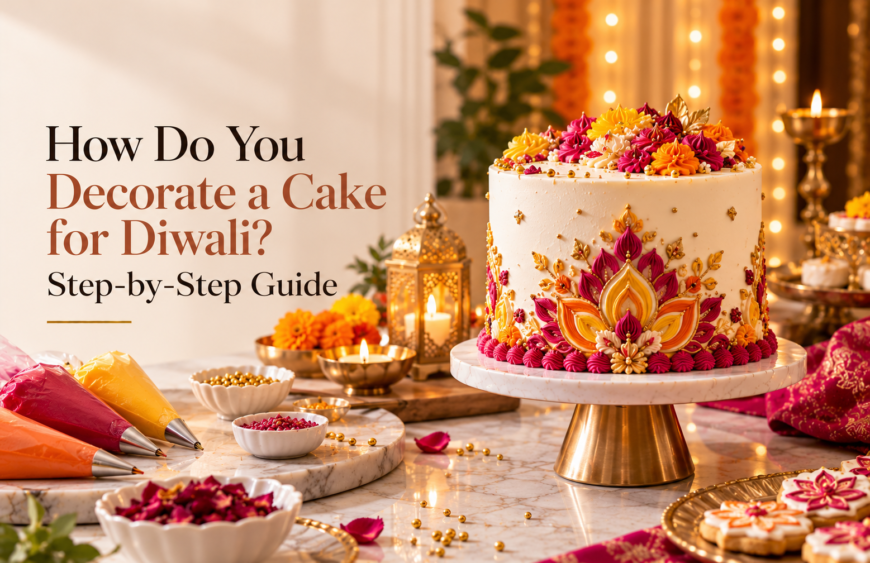
Decorating a cake for Diwali is all about bringing the warmth of the Festival of Lights into your dessert design. The easiest approach is to start with a smooth, stable cake and build up the look using festive colours, rangoli-inspired patterns, diyas, mithai-inspired details, and a touch of gold. This makes it possible to create a beautiful Diwali cake design at home without making the decoration feel overly complicated.
At Made by Confetti, we love cake styling that feels considered rather than crowded. For Diwali, that means choosing a few strong decorative details and letting each one have its moment. The result can be traditional, modern, or a little bit of both.
Here is a simple step-by-step guide to how to decorate a cake for Diwali.
Step 1: Start With a Clean, Flat Cake
Before adding colours, patterns, or festive decorations, create a smooth foundation.
If your cake layers have domed tops, carefully trim and level them so they stack evenly. Uneven layers can make the finished cake look tilted and make decorating more difficult.
Next, apply a thin crumb coat of buttercream or frosting around the entire cake. This first layer catches loose crumbs and creates a cleaner surface for the final frosting layer.
Chill the cake for around 20–30 minutes, or until the coating feels firm. Then apply the final layer of frosting.
For a traditional Diwali cake decoration, consider colours inspired by the celebration:
- Deep royal blue with warm gold
- Saffron yellow with red accents
- Rich chocolate brown with gold
- Deep rose with warm gold
- Cream with colourful festive details
You can either create a smooth finish with a scraper or keep the surface slightly rustic with visible swirls.
Step 2: Add a Rangoli-Inspired Design
Rangoli is one of the easiest sources of inspiration for a Diwali cake. A circular pattern on the top of the cake can instantly make the design feel festive.
Use small piping tips with brightly coloured icing. Pink, green, turquoise, yellow, and orange work beautifully against a neutral or darker cake base.
Start at the centre of the cake and gradually work outward. Create small loops, dots, petals, teardrops, or concentric shapes to form a simple mandala-style design.
You do not need to recreate an elaborate rangoli. A simplified pattern is often more effective on a cake because it keeps the design clean and balanced.
While the icing is still soft, add small sugar pearls or festive sprinkles at selected points. Gold accents can give the pattern a subtle glow without covering the entire surface.
This is one of our favourite Diwali cake decorating ideas for beginners because you can adapt the complexity to your skill level.
Step 3: Bring in the Diyas
A Diwali cake would not feel complete without the warm symbolism of diyas.
You can create small diya decorations using chocolate or fondant, depending on the look you want.
Chocolate diya decoration
For a richer, dessert-inspired finish, use small chocolate moulds to create diya-shaped or cup-like decorations.
Once the chocolate has set, carefully remove the shells from the moulds. You can add colourful sprinkles around the edges and fill the centre with a small amount of white whipped cream to suggest the oil or ghee.
Fondant diyas
For a more traditional visual, roll out terracotta, brown, saffron, or another festive shade of fondant.
Shape small pinch-pot forms with a pointed end to resemble traditional clay diyas.
For the flame, use red, orange, and yellow fondant to create a simple flame shape. Layering the colours can make the flame look more dimensional.
Place the finished diyas around the top of the cake or arrange a small group in the centre.
Styling tip: Keep the diya decorations proportional to your cake. A few well-positioned diyas usually look more elegant than covering the entire surface.
Step 4: Add Mithai-Inspired Details
One of the most beautiful ways to personalise a Diwali cake design is to borrow visual inspiration from Indian mithai.
Think about the colours and textures associated with festive sweets rather than trying to recreate an entire mithai box on top of the cake.
Finely chopped pistachios can add a beautiful green contrast, while sliced or chopped almonds provide texture. You can arrange them around the top edge or create a small border near the base.
Saffron strands can also work as a delicate accent when used sparingly.
For floral decoration, use only flowers that are specifically sold or supplied as food-safe edible flowers. Calendula and suitable edible flower petals can add a traditional festive touch. Never place ordinary decorative flowers directly onto a cake unless they are confirmed food-safe for cake use.
The key is restraint. Choose two or three elements rather than adding every possible decoration.
Step 5: Finish With a Touch of Gold
Diwali is associated with light, warmth, and celebration, so gold is a natural finishing colour.
Edible gold leaf or edible silver leaf can be applied carefully to selected areas of the cake. Rather than covering the entire surface, try placing small accents around the rangoli pattern, on the diyas, or over selected nuts.
You can also use an edible gold or silver shimmer product suitable for cakes to create a soft glow.
The goal is not to make every surface sparkle. A few carefully placed highlights can make the cake feel much more polished.
Gold also works beautifully with royal blue, saffron, chocolate, cream, and deep rose making it easy to create a sophisticated Diwali cake decoration without using too many colours.
Three Easy Diwali Cake Styles to Try
Not sure which direction to take? Start with one of these three approaches:
| Style | Cake Base | Decoration |
| Traditional & festive | Cardamom or fruit cake | Rangoli piping, colourful fondant, diyas, gold accents |
| Mithai-inspired | Rasmalai or besan barfi-style cake | Pistachios, saffron, edible petals, gold details |
| Modern & playful | Chocolate ganache cake | Chocolate diyas, bold colours, gold shimmer |
If you want to add a personalised message, name, age, or short festive phrase, a cake topper can become the final focal point rather than adding more decoration to the cake itself. Made by Confetti’s core product range includes custom cake toppers and cake-decorating tools designed around celebrations and personalised details.
You can explore the Cake Toppers collection for inspiration.
How to Make Your Diwali Cake Look More Professional
A professional-looking cake does not necessarily require complicated techniques. Focus on three things: a clean base, controlled decoration, and balance.
If the cake already has an elaborate rangoli pattern, keep the sides simple. If you are using large diyas or a statement topper, reduce the number of additional decorations.
Cake decorating tools can also make a noticeable difference. Scrapers, stamps, embossers, and other decorating tools can help create cleaner surfaces and repeatable decorative details. These are particularly useful when you want to move beyond basic frosting and experiment with patterns and textures.
Most importantly, give yourself enough time. A festive cake is much easier to decorate when you are not trying to complete every step minutes before guests arrive.
Final Thoughts
The best answer to how to decorate a cake for Diwali is to start with the celebration itself and then choose a few visual elements that represent it.
A rangoli-inspired pattern can create the centrepiece. Diyas bring warmth and meaning. Pistachios, saffron, and edible petals add an Indian-inspired finish, while carefully placed gold details create the glow associated with Diwali.
You do not need to use every idea in one cake. Choose a colour palette, pick two or three decorative elements, and give them enough space to stand out.
That is often what turns a homemade cake into a celebration-worthy centrepiece thoughtful details, beautifully balanced.
FAQs
1. What colours are best for a Diwali cake?
Royal blue, saffron yellow, warm gold, deep rose, red, orange, and cream all work well for Diwali cakes. For a more elegant look, choose one main colour with gold accents instead of using too many colours.
2. How can I decorate a Diwali cake at home?
Start with a smooth frosted cake, then add a simple rangoli or mandala pattern, small diya decorations, pistachios or other mithai-inspired details, and a few gold accents. A personalised cake topper can be added as a final focal point.
3. What can I use to make diyas for a Diwali cake?
Small diyas can be made using chocolate or fondant. Chocolate creates a rich, edible decoration, while fondant can be shaped and coloured to resemble traditional clay diyas.
4. How do I make a Diwali cake look elegant rather than overcrowded?
Use a limited colour palette and select only a few decorative elements. For example, a royal blue cake with a gold rangoli, two or three diyas, and a personalised topper can look more polished than a cake covered with multiple decorations.
5. Can I use real flowers on a Diwali cake?
Only use flowers that are specifically confirmed to be food-safe and suitable for direct cake contact. Flowers intended only for decorative or floral arrangements should not be placed directly on food.