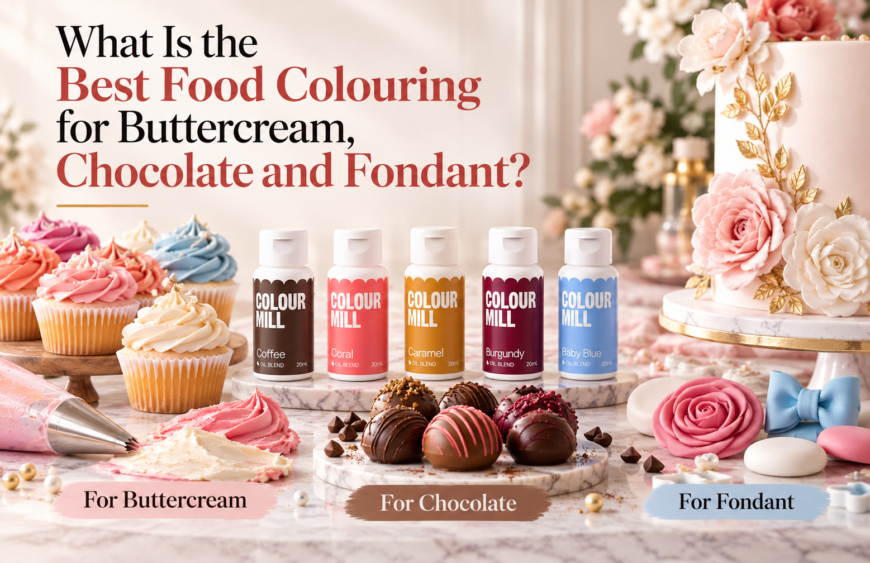
Choosing the best food colouring for cakes is not simply about picking the brightest shade. The right colour depends on what you are colouring. Buttercream, chocolate, and fondant have different fat and moisture levels, so a colouring that works beautifully in one can cause problems in another.
As a simple rule, oil-based food colouring is a versatile choice across buttercream, chocolate, and fondant, while gel colours are particularly useful for fondant and many buttercream recipes. Chocolate needs the most care because water-based colours can cause melted chocolate to seize.
Quick Guide to Choosing Food Colouring
| Cake Medium | Recommended Colouring | Why It Works |
| Buttercream | Oil-based or gel | Works well with different fat and moisture levels |
| Chocolate | Oil-based or powdered | Avoids adding water to chocolate |
| Fondant | Gel paste or oil-based | Provides strong colour without excessive moisture |
The key is to match the colouring to the medium before you start decorating.
What Is the Best Food Colouring for Buttercream?
For food colouring for buttercream, both oil-based and concentrated gel colours can work well. The right option depends on the type of buttercream you are making.
Buttercream contains a significant amount of fat, particularly recipes made with butter. This means highly concentrated colourants are useful because you can achieve a strong shade without adding a large amount of liquid.
Oil-Based Colouring for Buttercream
Oil-based colours are particularly useful when you want an even, intense colour in a high-fat buttercream. They disperse through the fat rather than relying heavily on water to distribute the pigment.
This makes them a useful choice for richer buttercreams, including Swiss or Italian meringue styles.
If you are creating deep colours such as navy, red, dark green, or black, using a concentrated colour can also help you build the shade gradually without adding unnecessary moisture.
Gel Colouring for Buttercream
Gel food colouring is another practical option, particularly for American-style buttercream.
Because gel colours are concentrated, you can add a small amount, mix thoroughly, and gradually build the colour until you reach the shade you want.
Tip: Always add colour gradually. A buttercream that looks slightly pale immediately after mixing may deepen as the colour develops.
For bakers who want to experiment with different colours and finishes, it is worth keeping both gel and oil-based options available rather than relying on one type for every recipe.
What Is the Best Food Colouring for Chocolate?
Chocolate requires more care than buttercream.
For food colouring for chocolate, the most important rule is simple: avoid water-based colouring.
Chocolate contains cocoa butter and other fats. Introducing water to melted chocolate can cause it to seize, turning a smooth, fluid mixture into a thick, clumpy mass that is difficult to work with.
Use Oil-Based Colouring for Chocolate
Oil-based candy colours are particularly suited to chocolate because they are designed to disperse into fat-based mixtures.
This makes them useful when colouring:
- Melted chocolate
- Chocolate decorations
- Candy melts
- Chocolate moulds
- Coloured chocolate details
Powdered food colours can also be useful when you need strong pigmentation without introducing liquid.
If chocolate decoration is part of your regular baking routine, keeping a dedicated oil-based colour set for chocolate can save you from accidentally using a water-based gel at the wrong moment.
Important: Do not treat all food colours as interchangeable. A colour that performs perfectly in buttercream is not automatically suitable for melted chocolate.
What Is the Best Food Colouring for Fondant?
Fondant has a different challenge. It needs to remain smooth, flexible, and workable while you knead and shape it.
For food colouring for fondant, concentrated gel paste colours are a traditional choice because they provide strong pigmentation without adding too much liquid.
Gel Paste for Fondant
Start with a small amount of gel colour and knead it into the fondant. It is much easier to add more colour than to correct fondant that has become overly saturated.
Food-safe gloves are also useful when working with darker colours, as the pigment can transfer onto your hands.
Gel colours work particularly well when you need a precise shade for:
- Cake covering
- Fondant decorations
- Flowers
- Lettering
- Figurines
- Cake accents
Can Oil-Based Colouring Be Used With Fondant?
Yes. Modern oil-based colours can also be suitable for fondant and can be particularly useful when you want strong, even colour.
This is one reason oil-based colouring can be a convenient option for decorators who work across multiple cake mediums.
If you regularly decorate cakes with buttercream, chocolate, and fondant, an oil-based colour range can reduce the need to keep completely separate colour systems for every project.
How to Choose the Right Food Colouring for Your Cake
Instead of asking only, “What is the best food colouring?”, ask, “What am I colouring?”
Use this quick decision process:
For buttercream: Choose oil-based colouring for rich, fat-heavy buttercreams, or a concentrated gel for recipes where gel colour performs well.
For chocolate: Choose oil-based or powdered colouring and avoid introducing water.
For fondant: Choose a concentrated gel paste or a suitable oil-based colour so you can achieve strong pigmentation without making the fondant unnecessarily wet.
This approach makes colour selection much easier and helps prevent common decorating problems.
A Little Colour Goes a Long Way
One of the easiest mistakes when colouring cake decorations is adding too much colour too quickly.
Start with a small amount, mix or knead thoroughly, and then evaluate the shade. This is especially important when working with concentrated colours.
For very dark shades, allow the coloured mixture some time to develop before adding more pigment. Building the colour gradually gives you better control and reduces the risk of changing the texture of your buttercream or fondant.
For cake decorators who care about the final finish, colour is not just decoration. It is part of the overall design. The right shade can make a simple cake feel considered, coordinated, and celebration-ready.
The Easiest Way to Remember It
If you only remember three things from this guide, remember these:
- Buttercream: Oil-based or gel colouring can work, depending on the buttercream.
- Chocolate: Use oil-based or powdered colouring and keep water away from melted chocolate.
- Fondant: Use concentrated gel paste or a suitable oil-based colour to avoid adding unnecessary moisture.
The best food colouring for cakes is ultimately the one that suits the medium you are working with.
When you are building a cake design from colour, texture, and finishing details, choosing the right colouring is the first step towards getting that final look just right.
FAQs
What Is the Best Food Colouring for Cakes?
There is no single colouring that is perfect for every cake medium. Oil-based colouring is a versatile option across buttercream, chocolate, and fondant, while gel colours are particularly useful for buttercream and fondant.
Can I Use Gel Food Colouring in Chocolate?
Standard water-based gel colouring is not the ideal choice for chocolate because water can cause melted chocolate to seize. Use an oil-based chocolate colour or a suitable powdered food colour instead.
What Type of Food Colouring Is Best for Buttercream?
Oil-based food colouring works particularly well with fat-rich buttercream, while concentrated gel colouring is also a practical choice for many buttercream recipes. Add colour gradually until you reach the desired shade.
What Food Colouring Should I Use for Fondant?
Concentrated gel paste is a popular choice for fondant because it can provide strong colour without adding excessive moisture. Suitable oil-based colours can also be used with fondant.
How Do I Get Dark Colours Without Ruining My Buttercream or Fondant?
Start with a small amount of concentrated colouring and gradually build the shade. Mix thoroughly between additions and allow the colour to develop before adding more. This gives you better control over both the final colour and the texture.